“A compass is not needed when you know the way.
It is needed when the landscape keeps changing”
Why This Book
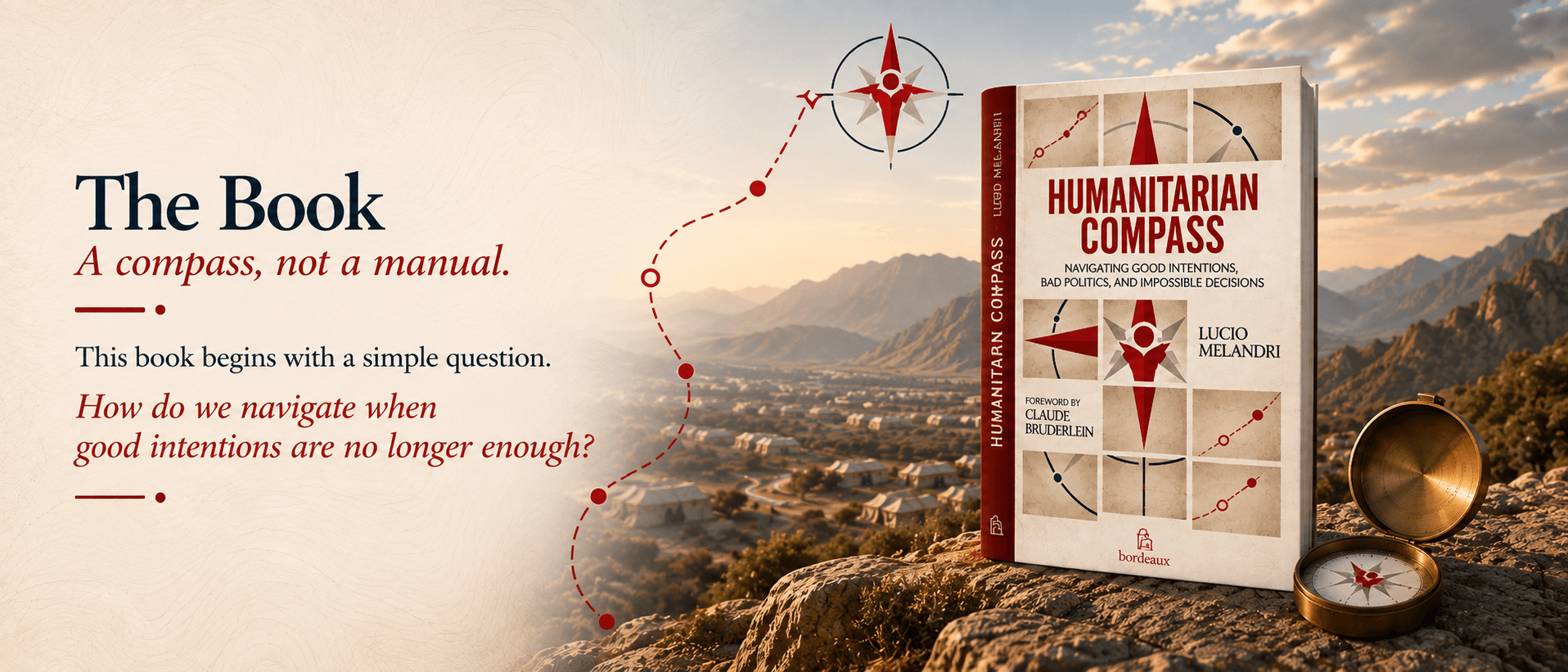
Many books explain how the humanitarian system works.
This book tries instead to show how to navigate within it.
It offers no recipes.
It proposes no perfect models.
It invites us to recognise complexity without giving up the responsibility to decide.
PART I: INSIDE THE SYSTEM
→ ACCESS
→ LAW
→ PRINCIPLES
→ NEGOTIATION
→ PROTECTION
Before deciding, we need to learn how to see.
PART II: NAVIGATING COMPLEXITY
→ LOCALISATION
→ STANDARDS
→ COORDINATION
→ ETHICS
→ THE FUTURE OF HUMANITARIAN ACTION
Knowing where room for manoeuvre still exists.
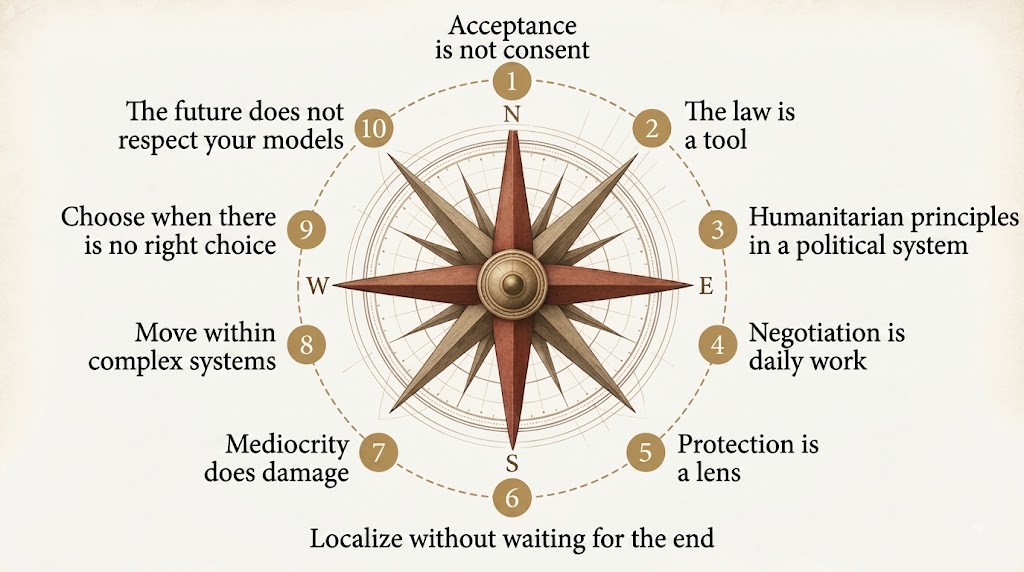

INSIDE THE BOOK

Who This Book Is For




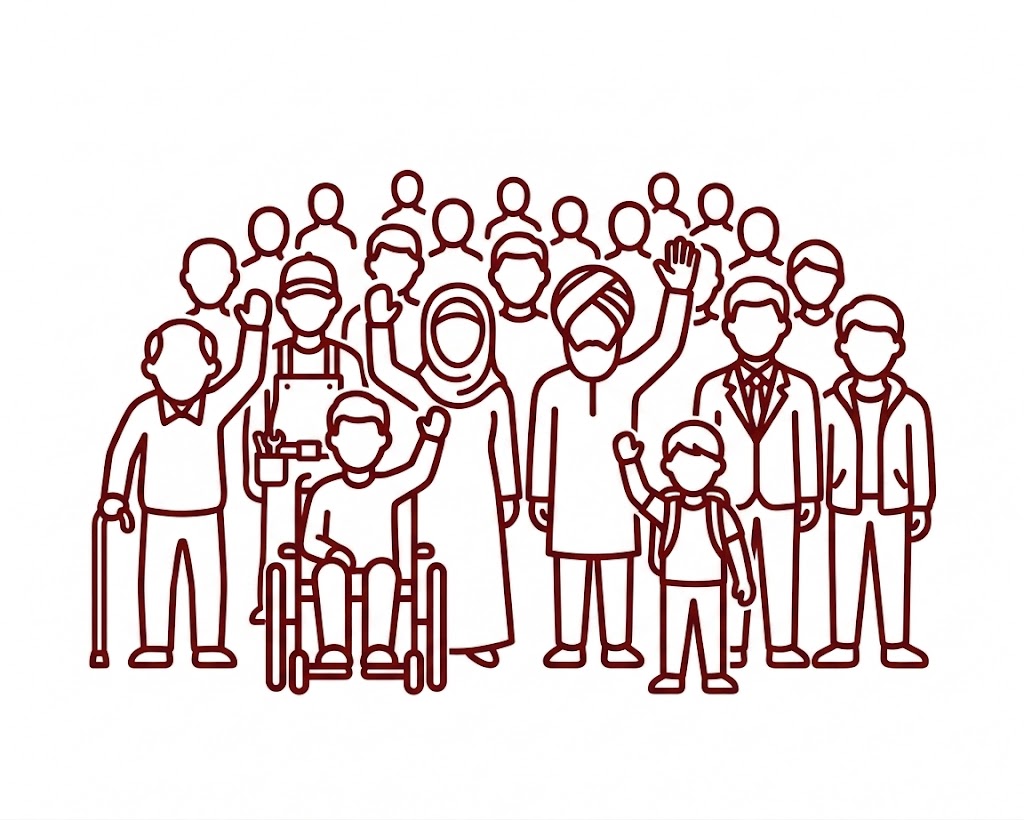
STUDENTS
HUMANITARIAN PRACTITIONERS
TEACHERS & TRAINERS
DECISION-MAKERS
ANYONE WHO WANTS TO UNDERSTAND MORE
For those studying the humanitarian system and seeking to understand how it really works.
For those working in the field and facing complex decisions every day in difficult contexts.
For those who teach, train and support new generations of humanitarian practitioners and leaders.
For those who design, fund or lead humanitarian action and shape the conditions in which it operates.
For anyone seeking a deeper understanding of humanitarian action and its real-world impact.
The Author
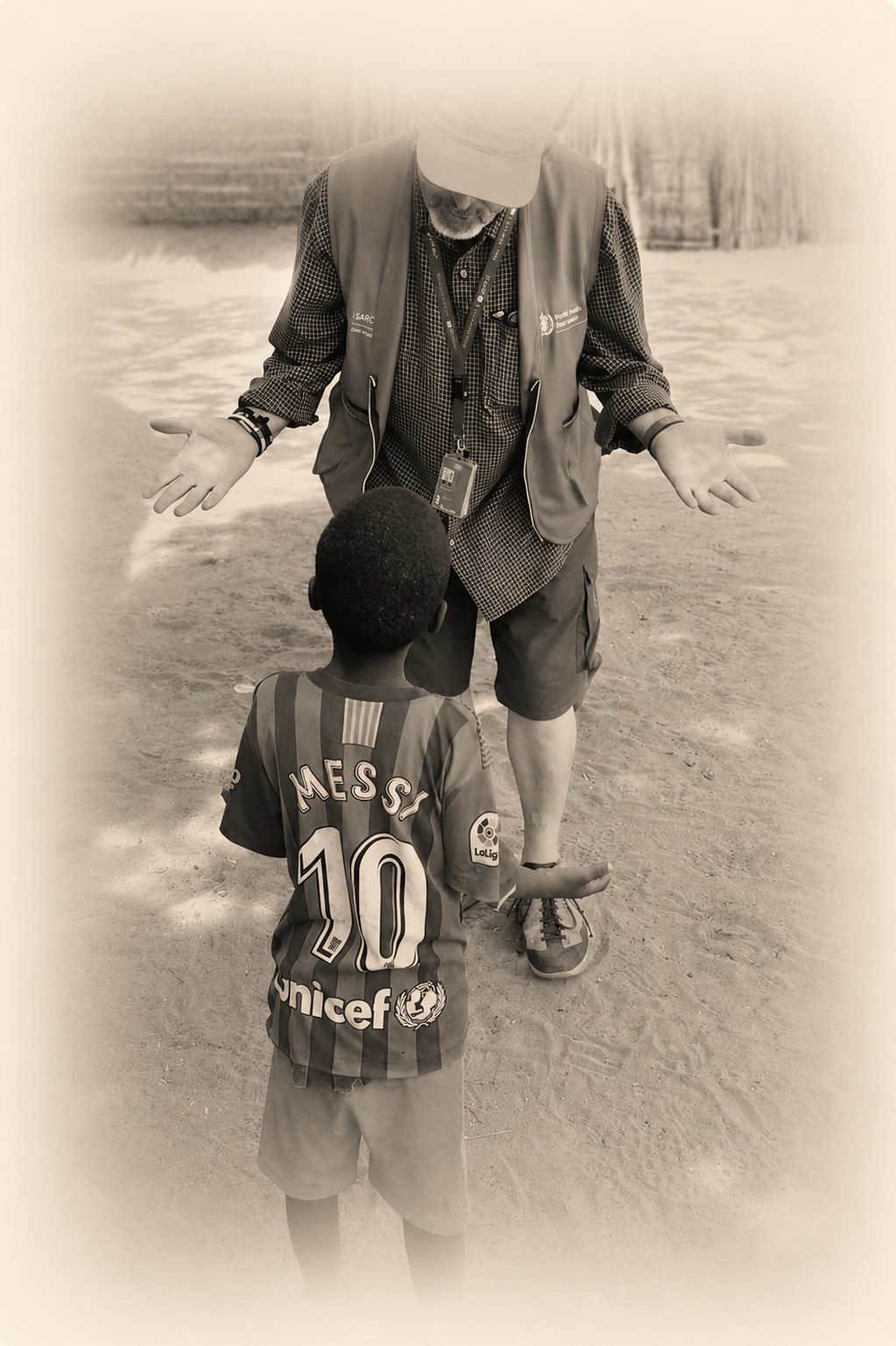
Lucio Melandri has spent over thirty years on the front lines of the most complex humanitarian environments, operating across armed conflicts, protracted crises, and natural disasters.
Throughout his career, he has collaborated with the United Nations, the Red Cross and Red Crescent Movement, and various international and local non-governmental organisations, experiencing first-hand the evolution, challenges, and contradictions of the humanitarian system.
His field experience has driven him to constantly explore operational friction: that critical space where theoretical humanitarian principles collide with a complex daily reality.
Rather than searching for perfect models, his work focuses on identifying the "room for manoeuvre" within imperfect systems.
Lucio firmly believes that humanitarian action cannot rely solely on good intentions.
Instead, it demands the ability to navigate grey areas, foster critical thinking, and take individual responsibility for the consequences of one's decisions—especially when forced to choose in the absence of a "right" option.
Today, he shares these reflections to provide a compass for practitioners in the field, convinced that awareness is the most powerful tool for those who refuse to stop making decisions.