Chapter Reading Time
20 minutes
Key Concepts
Complexity · Change · Adaptation · Innovation · Future
Guiding Questions
When do we realise that it is not the world that is wrong, but our way of reading it?
Explore Further
The problem is not predicting the future.
It is recognising when the present has already changed.
Crises do not just happen: they overlap.
Technologies accelerate decisions.
Climate change alters contexts while we intervene.
The Nexus reminds us that the categories with which we divide the world no longer coincide with the way the world works.
Perhaps the task of the humanitarian practitioner is not to predict what will happen.
It is to notice in time that reality has already stopped following the model with which we were reading the situation.
Staying oriented does not mean having perfect models.
It means being willing to continuously question them.
Questions That Remain Open
Which model do we keep using even when reality proves to us that it no longer works?
What changes are we interpreting as exceptions rather than structural transformations?
At what moment does adaptation become more important than prediction?

Room for Manoeuvre
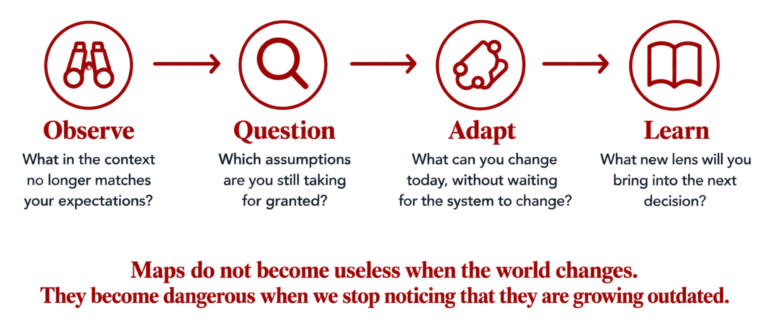
When the maps change
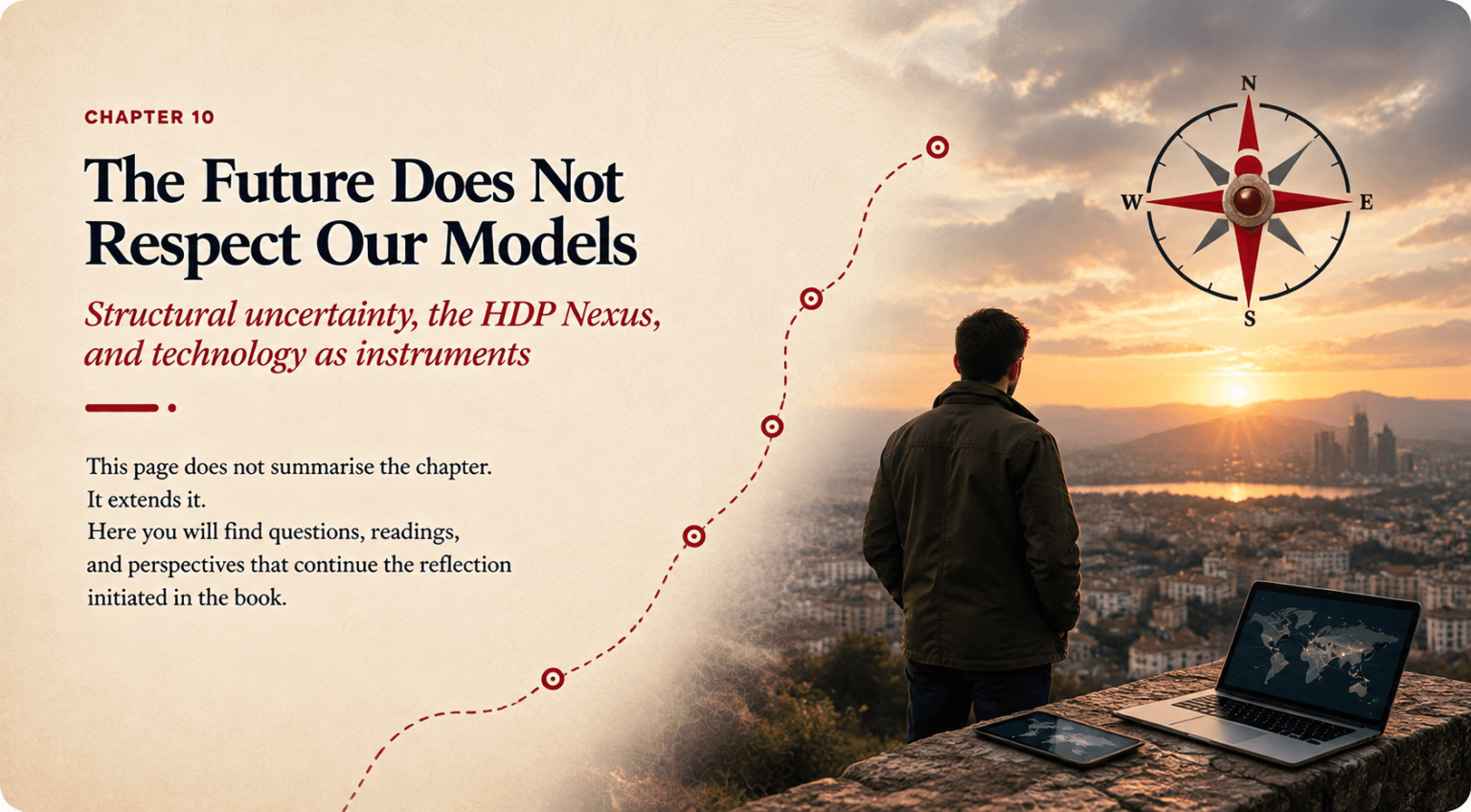
The future does not arrive all at once. It begins when reality stops following our categories.
Room for manoeuvre stems from the ability to notice this.
To question models that worked until yesterday. It is not a matter of predicting every change.
But of recognising when it is time to change the way we read reality.
To Continue the Journey

Aid on the Edge of Chaos: Rethinking International Cooperation in a Complex World - Ben Ramalingam
One of the most influential works on the relationship between complexity, change and international cooperation. It shows why contemporary crises defy linear models and why the future requires the ability to adapt rather than the pursuit of control.
Read More →
Frontline Associates – Negotiation, innovation and artificial intelligence
Tools, training and insights for professionals involved in complex negotiations, including the use of artificial intelligence in preparing for negotiations and in training practitioners.
Explore Further →
Recommendation on the Humanitarian–Development–Peace Nexus -
OECD Development Assistance Committee (DAC)
The key international document on the Triple Nexus. The chapter urges readers to view it not as a definitive solution, but as a useful tool for understanding the tensions between humanitarian response, development and peace.
View →
Fresh Humanitarian Perspectives Podcast - Humanitarian Leadership Academy
Conversations with humanitarian workers, researchers and leaders on innovation, leadership, adaptation and the future of humanitarian action.
Listen →
Understanding Digital Risks in Armed Conflict – ICRC
An analysis of the risks posed by digital technologies in armed conflicts and their implications for the protection, rights, safety, dignity and resilience of civilians.
Explore →